Let me guess:
You used discipline to stick to your habits.
- This might be a diet.
- Posting on social media.
- Or starting a YouTube channel.
And you know what to do. You have done the research. You read multiple newsletters, studied overcoming ADHD symptoms, watched 1000 of videos on YouTube, and probably read books like Atomic Habits.
But the more you force yourself, the more friction you create, and you end up in the same spiral: overeating, falling off your post schedule, or never recording the YouTube script.
What if the solution to this problem was never the missing discipline, but the simple fact that you just didn’t enjoy it?
It just wasn’t fun enough.
In this letter, I want to teach you a system for gamifying your life by creating a hierarchy of „questlines“ across the 9 stages of ego development (actual concept), and make this your infinite game to master, so you never end up in the same situation again, and if you do, you know what to do.
Understanding Human Development
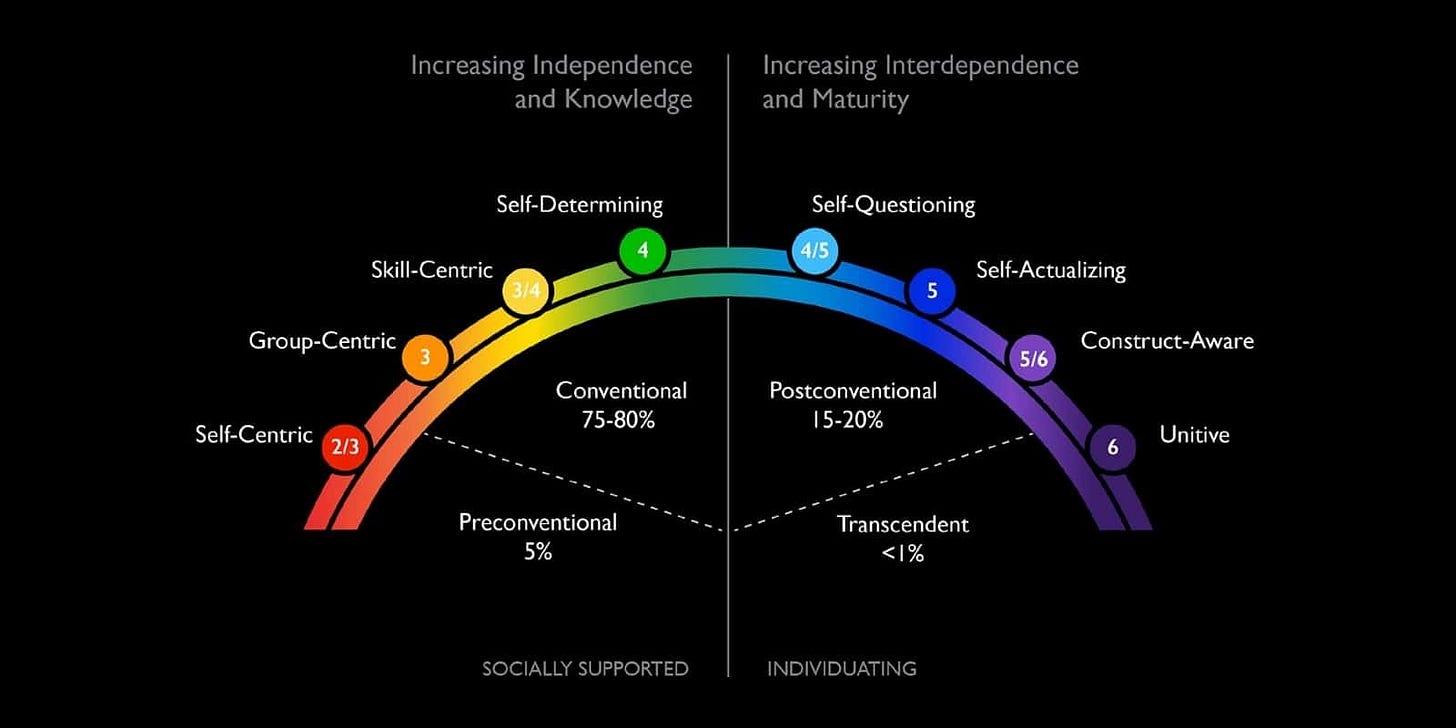
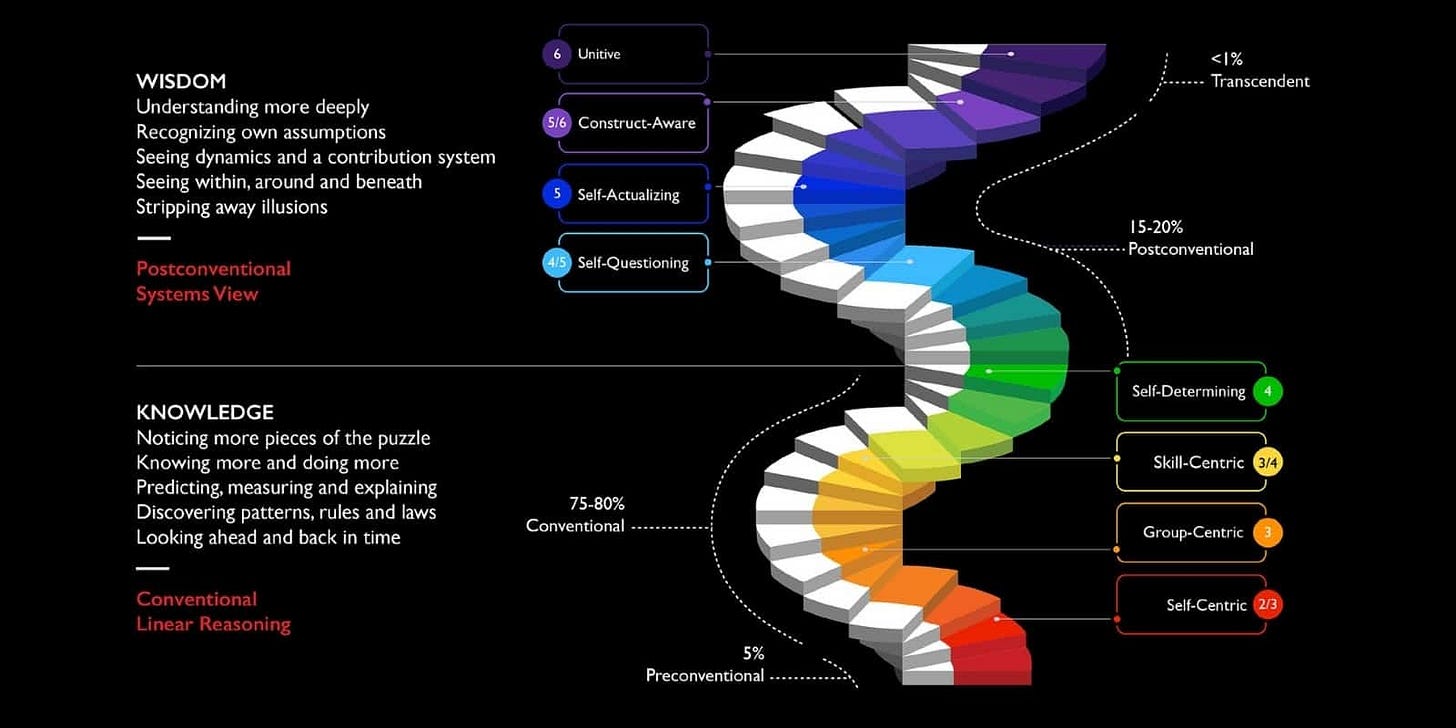
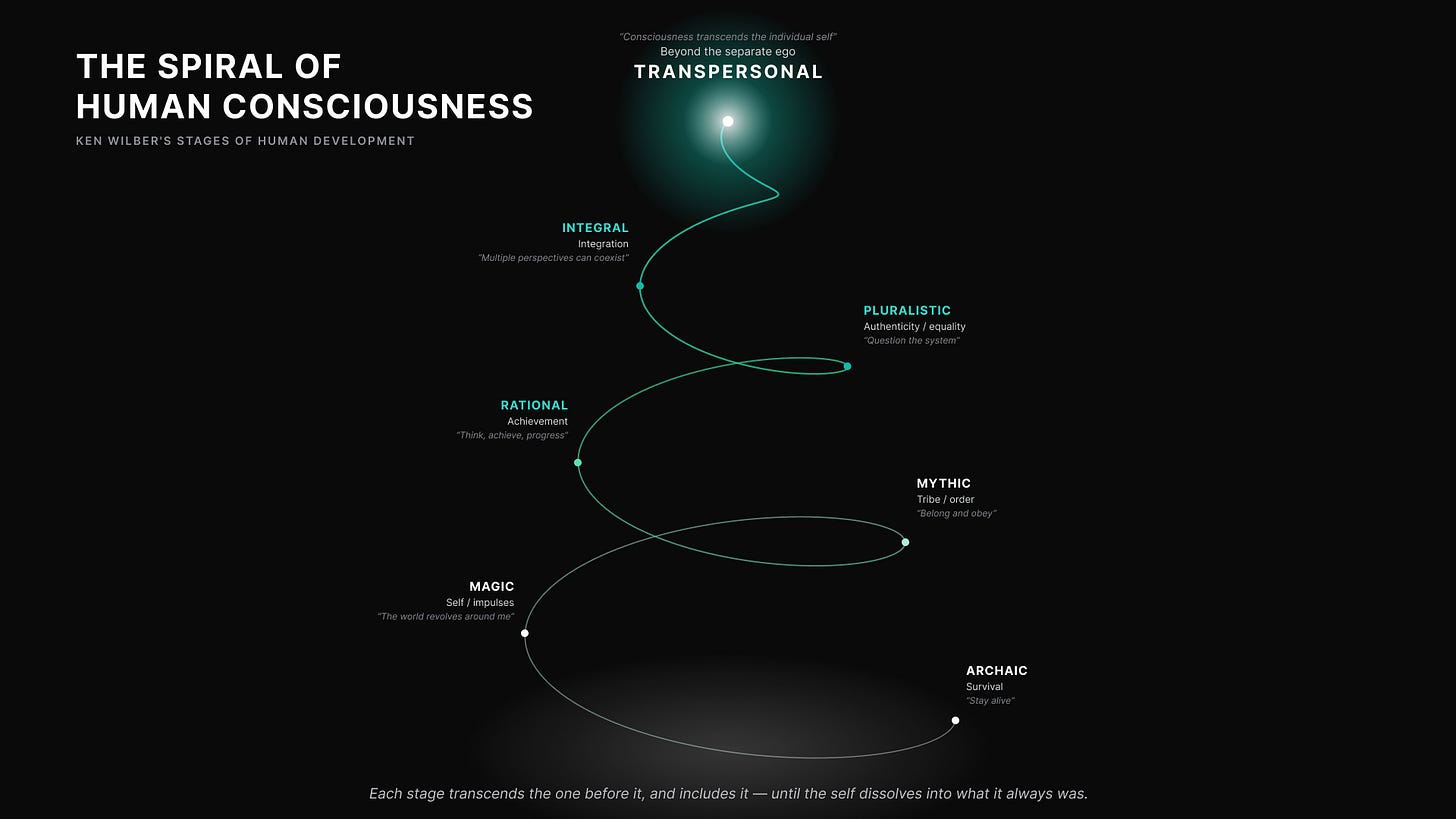
The 9 Stages of Ego-Development by Jane Loevinger, later refined and popularized by Susanne Cook-Greuter, maps how people’s sense of self, values, and ways of making meaning grow more complex over time across 9 stages of development.
- Impulsive – ruled by immediate needs and impulses; others exist mainly to meet your needs.
- Self-Protective – wary, opportunistic; focused on avoiding blame and getting an edge.
- Conformist – identity comes from fitting in with the group; rules are followed because “that’s what’s done.”
- Self-Aware – first real self-reflection; you notice you don’t always fit the group norm, more tolerance for exceptions.
- Conscientious – strong internal standards, self-chosen goals, achievement-oriented; you judge yourself by your own values, not just external rules.
- Individualistic – aware of inner contradictions and paradox; values individuality and others’ individuality; more tolerant of ambiguity.
- Autonomous – can hold competing needs and values in tension without needing to resolve them; respects others’ autonomy; comfortable with complexity.
- Construct-Aware – sees that even your own frameworks and identity are constructs; deep interest in process over content, in how meaning itself gets made.
- Unitive – rare; a sense of interconnection that goes beyond a separate self; ego is held lightly rather than being the organizing center.
→ You don’t need to understand this right away; it took me a while as well, and you could read an entire book about it, or a 97-page document.
Our goal here isn’t to understand it right away. It is to build a system that lets us level up and progress regularly to achieve our goals and move up the hierarchy of questlines.
Quests, same as in a video game, should be fun.
The moment a quest becomes repetitive and boring, players are likely to quit. To prevent this, we can offer a big reward at the end of quests. If we stick with it, we’ll be rewarded greatly. If the reward is too small, we end up quitting.
Building A Hierarchy of Questlines.
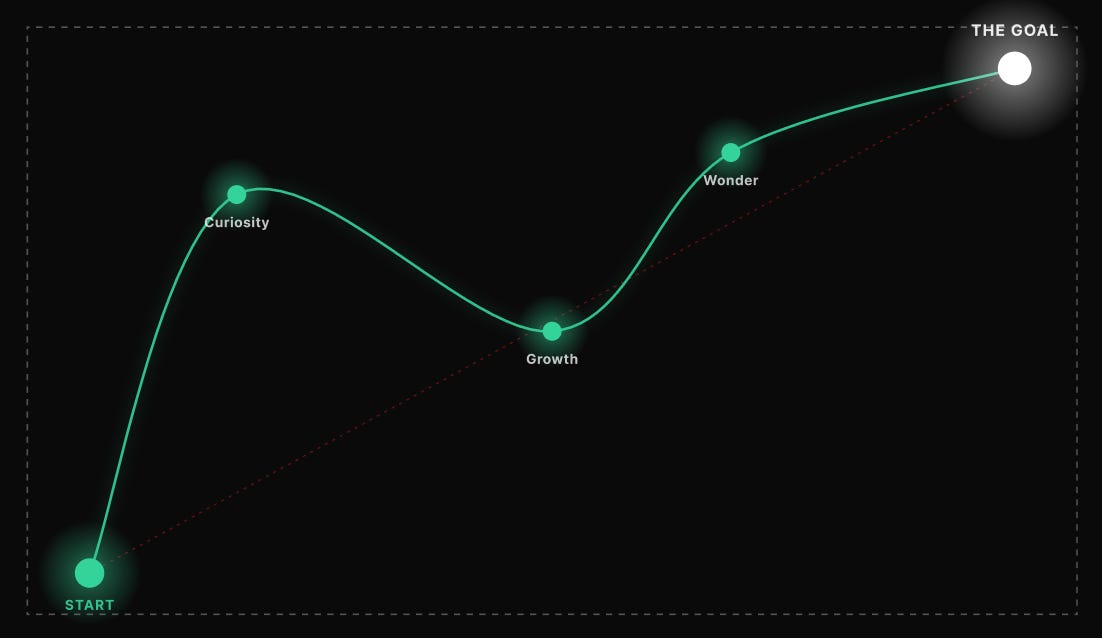
The most important thing is to maintain clarity about the main quest you are pursuing. Additionally, part of the journey is following your curiosity and wonder, as they make it more meaningful and help you stay on the path. But you should never lose the red line.
A story in the book “The Alchemist” beautifully explains my idea of the “red line.”
“A merchant sends his son to a wise man to learn the secret of happiness. The sage hands the boy a spoon with two drops of oil in it and tells him to tour the palace without spilling them. The boy returns having seen nothing of the palace’s wonders because he was so fixed on the spoon. The sage sends him back, this time telling him to enjoy the marvels of the palace — and the boy returns having seen everything, but the oil is gone.”
The sage’s closing lesson, paraphrased:
The secret to happiness lies in looking at all the wonders of the world and never forgetting the two drops of oil in the spoon.
How To Play The Game.
If I were to recreate the 9 stages of development into a lifelong video game, I would pursue this structural progression (you can’t skip stages):
- Master your body
- Curate your environment
- Join a tribe (before creating a tribe)
- Develop agency by becoming an entrepreneur
- Discover yourself by detaching from the opinions of others
- Develop Creator Energy by becoming the author of your life
- Integrate the Creatorpreneur by balancing your inner energies
- Build your own tribe, family, and service to others
- Transcend the game by surrendering
Stage 1: Master Your Body
Before we can progress in any domain, we need to master our bodies first.
Things like sleep hygiene, nutrition, movement, emotional regulation, impulse control, and basic discipline.
The goal is agency over immediate desires.
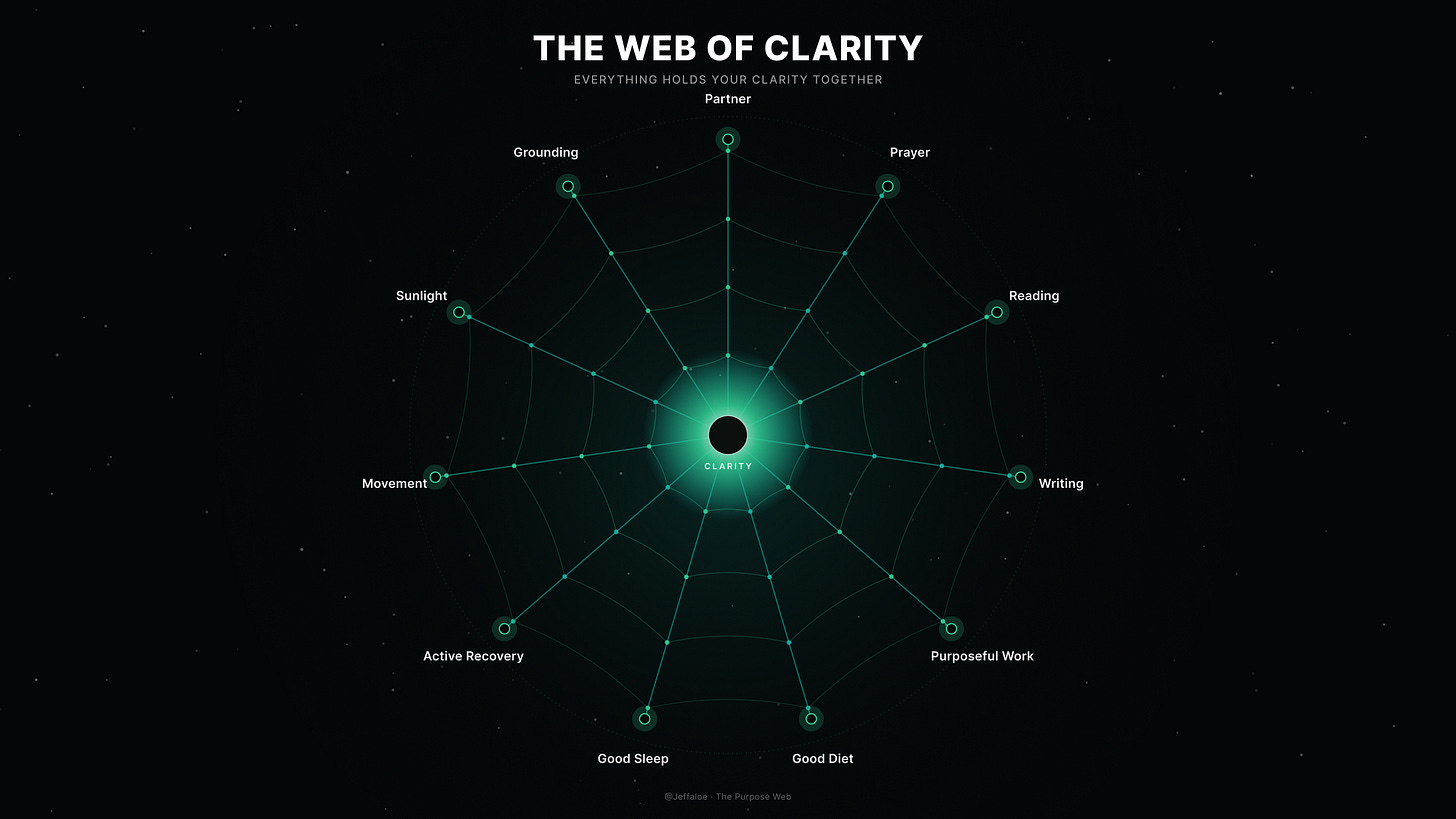
Following health protocols is fundamental to the clarity we need to keep progressing toward the pinnacle of human development. For this, the Pareto principle (80/20) is enough, don’t overcomplicate things.
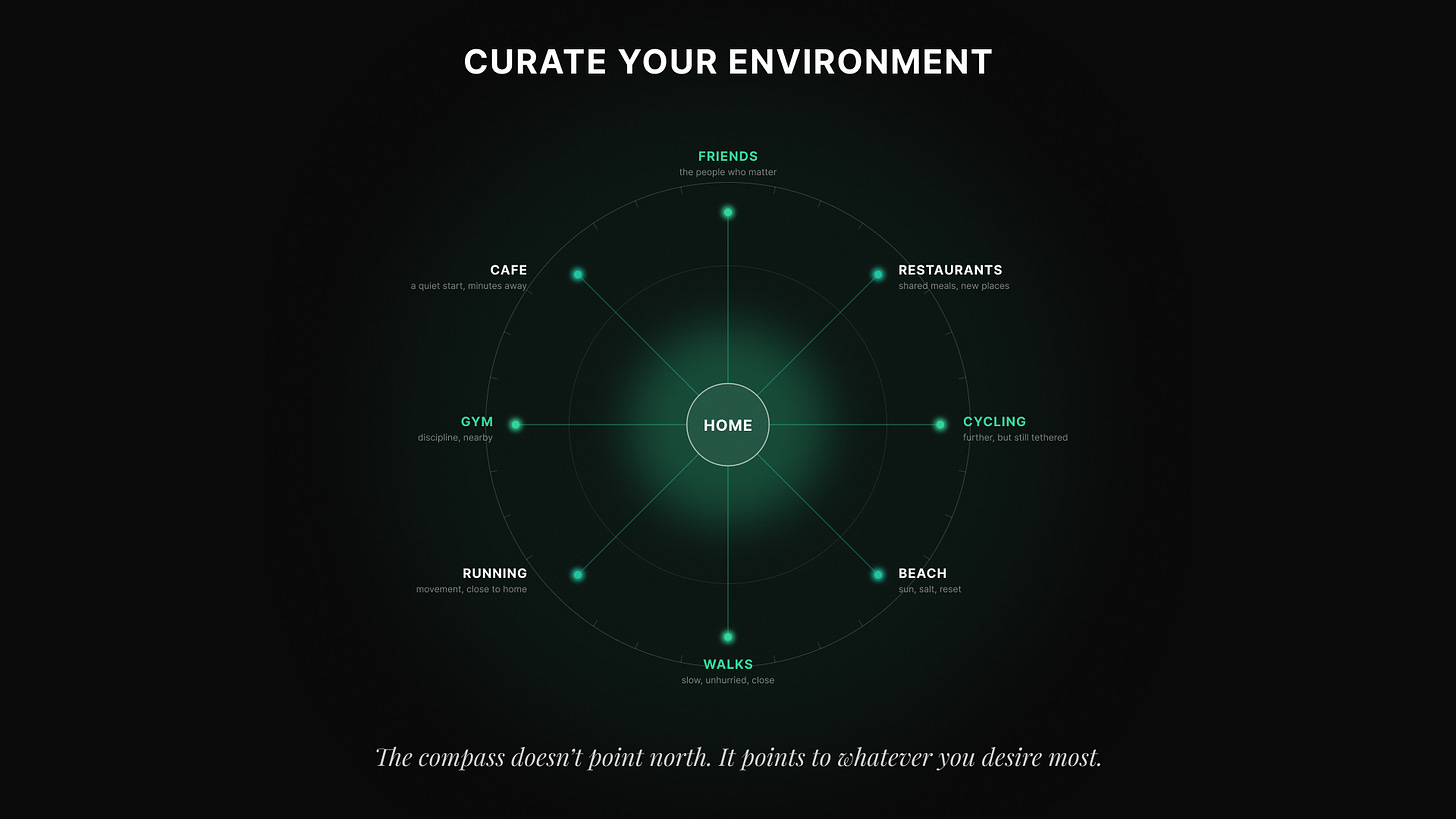
Stage 2: Curate Your Environment
Your environment shapes your behaviours, but moving places won’t automatically change your life. It just releases old patterns and makes space for new ones to emerge.
If you are having trouble getting out of your current condition, then get out of your current condition. — Alex Hormozi
You can master yourself, but if your environment constantly drags you down, it might be worth a change.
Find an environment — a place you like to live, a gym you like, a place you feel comfortable, a place you feel safe, where the right people are around — so you can feel your best and perform your best.
For example, I stayed in Germany for 2 years, and literally my life didn’t change; my mind and body changed, but not my life.
Just 2 months abroad changed my life in a day, but I’d already taken those steps before, so the effects compounded.
Right now I am visiting Germany for a few appointments before going back to Asia. But on the first day, all my negative emotions came back; even after a month here, it didn’t get better.
Having these two extremes of living the life you imagine and staying at your worst, side by side, sharpens how important the environment is. So, if your environment doesn’t serve you or energize you, consider changing it after taking care of your body.
(Will be back in Asia at the beginning of October for the launch of The Weekly Bonfire.)
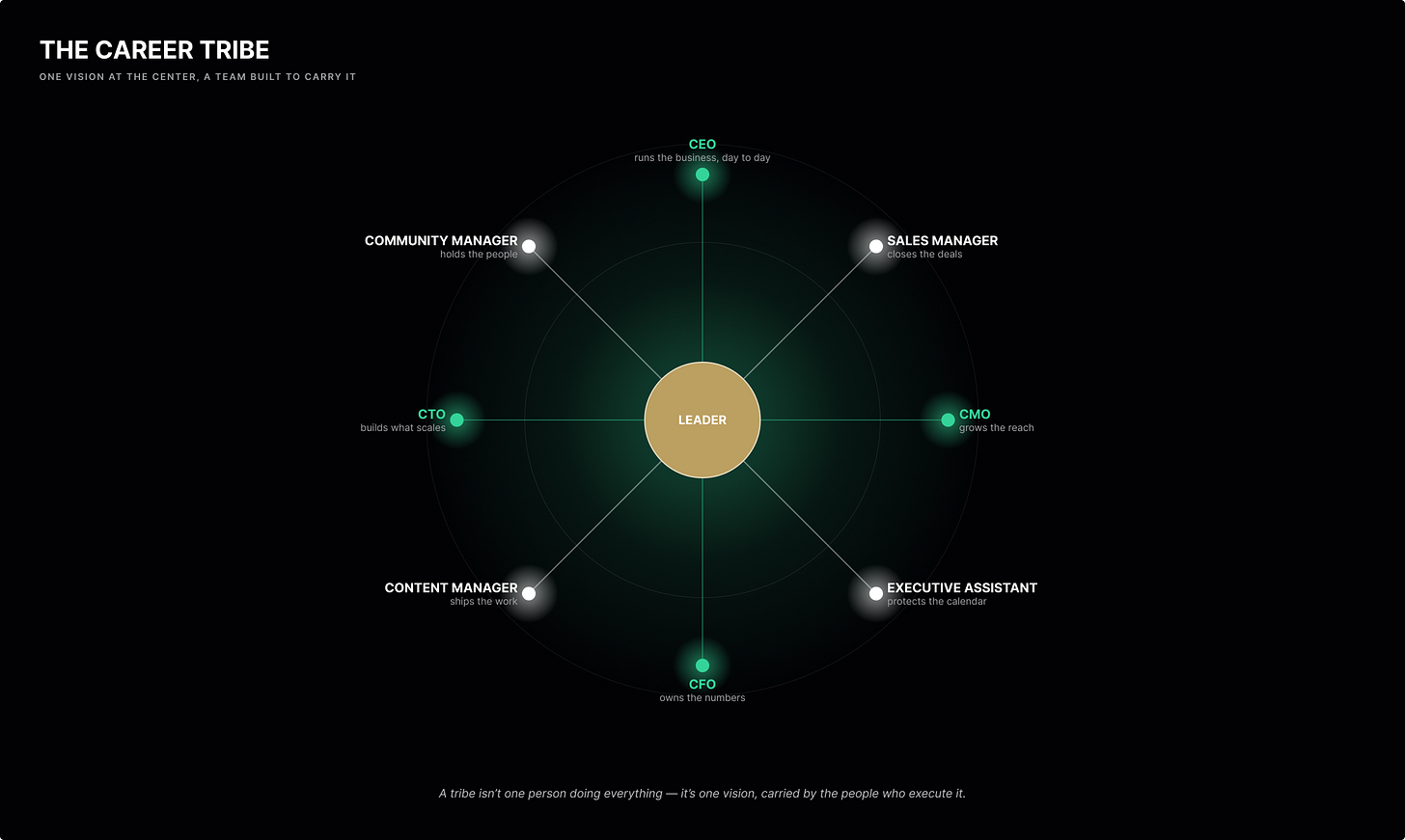
Stage 3: Join A Tribe Before Building One.
Everyone went to school. This is your first major interaction with a tribe. This continues if people attend university or find a job afterward.
This is a crucial step in learning about friendship, loyalty, cooperation, social norms (which differ across countries), intimacy, and community. You learn interdependence.
A job perfectly showcases this tribe/community.
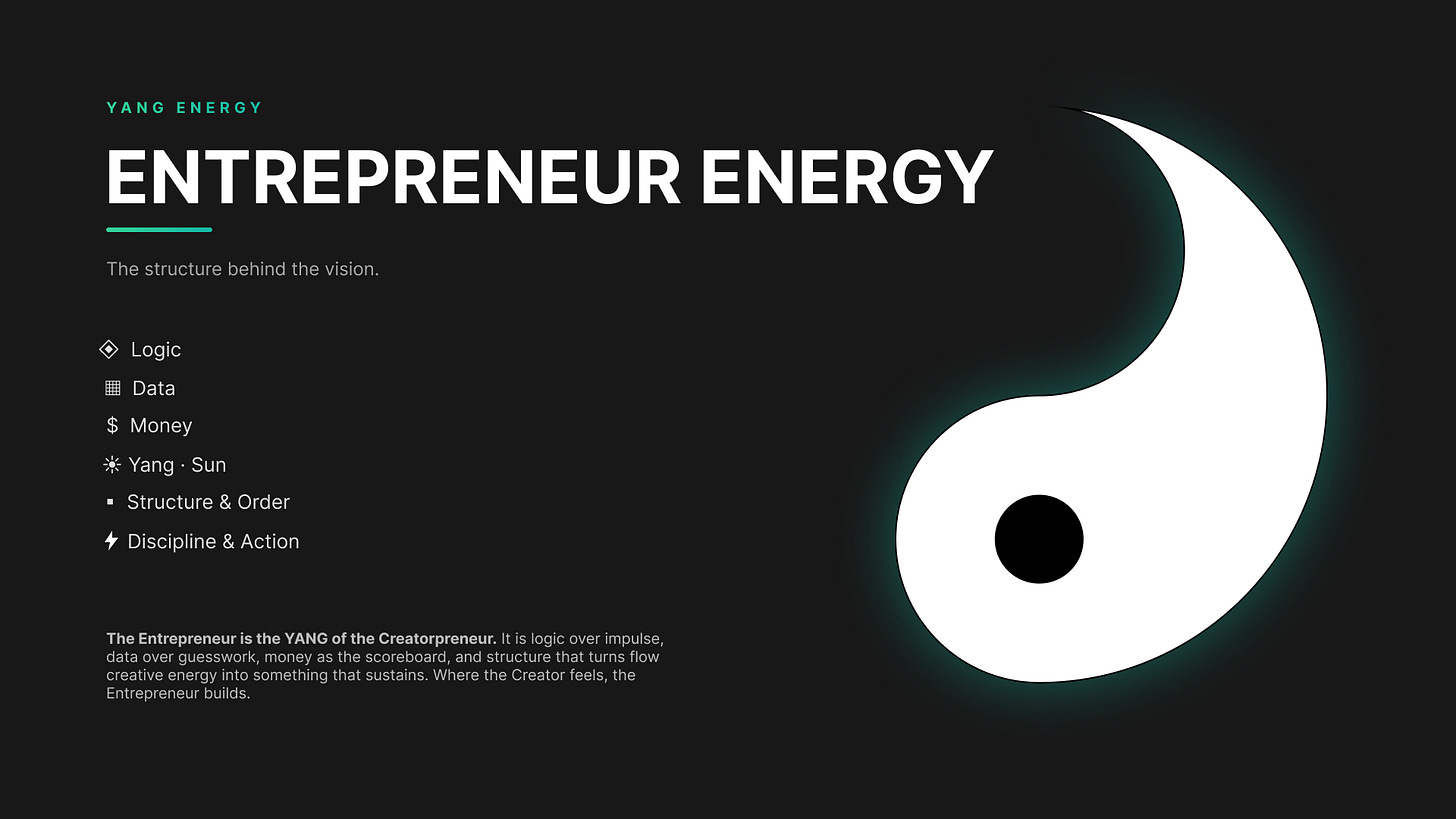
Stage 4: Develop Agency By Following Entrepreneurship.
You don’t need to start a business right away. It can be pretty hard, depending on what work fulfills you. But learning entrepreneurship matters because it gives you a ton of agency.
You become a curator of your life because you learn to think strategically and structurally.
You develop competence and pursue difficult external goals, such as building a business, maintaining a tight schedule, running a marathon, mastering your craft, or creating/managing wealth.
Start as a side hustle on the weekend.
Stage 5: Discover Yourself.
That’s what it was for me after my first startup and after my Dad passed away. It was the driver of emotional equilibrium and learning to accept your emotions (especially as a man) by coping with grief. In a painful way, this levels you up and shatters you at the same time. In the end, you learn the importance of internal balance, which leads to emotional equilibrium. (which is stage 7)
By discovering yourself, you learn to question your goals and whether they came from society, your parents, social media, or, in general, external influences. Did you actually want the company, the money, the status, and the lifestyle associated with it?
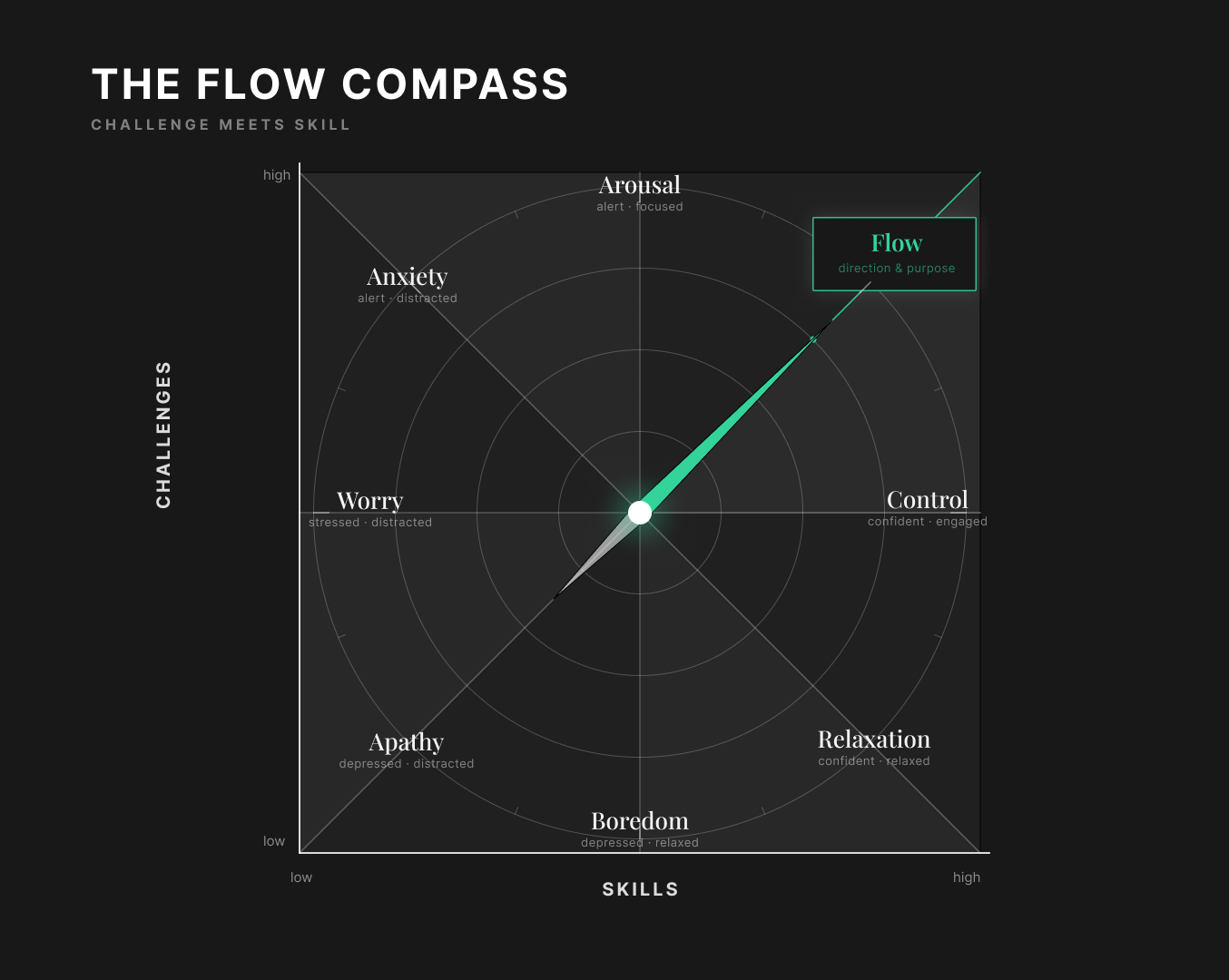
You start questioning your conditioning and may first become interested in reading about spirituality, the origin of the universe, and who “pushed” the Big Bang. Your goals might change, and you stop acquiring things and start transforming your consciousness and discovering your purpose.
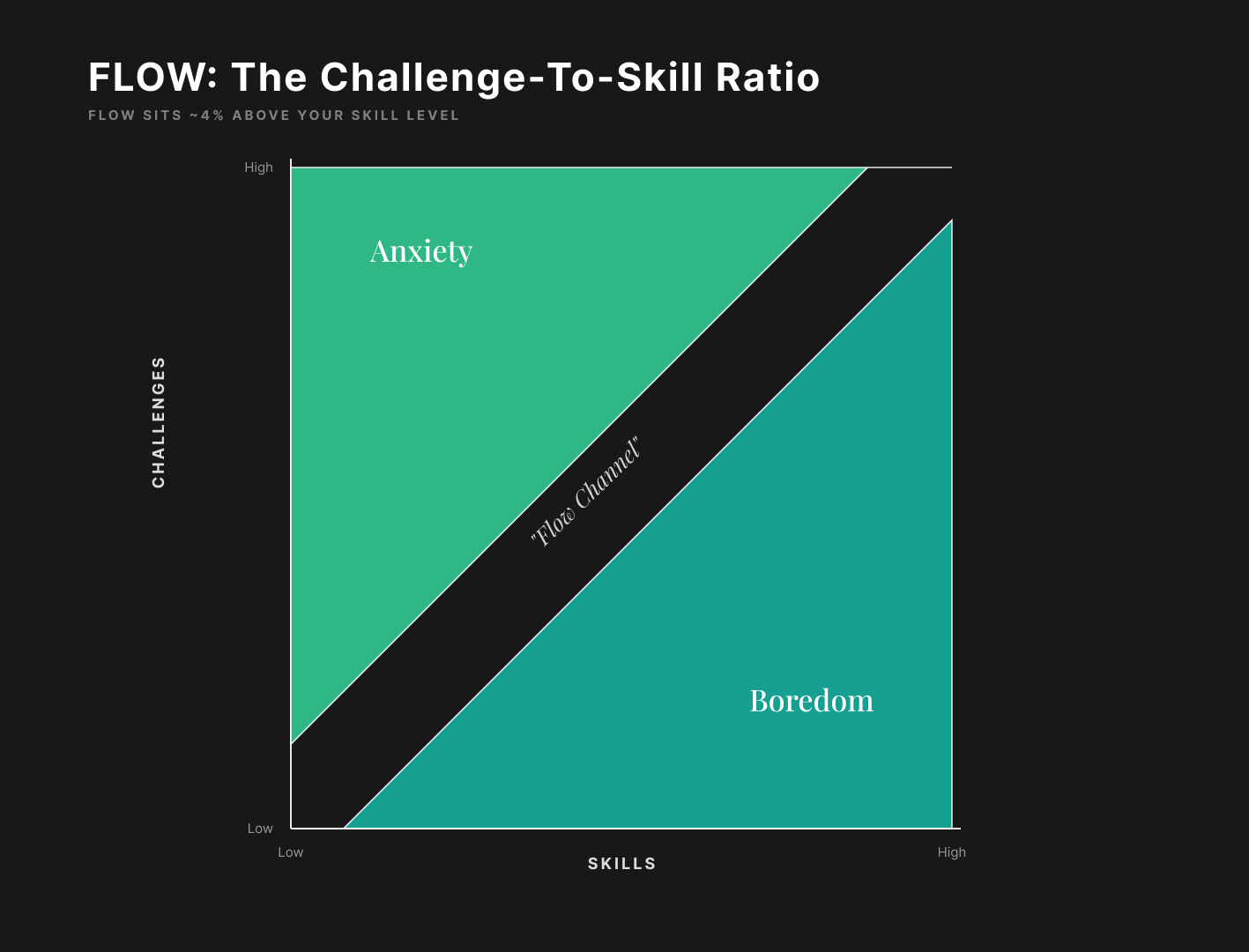
Which I call the flow compass.
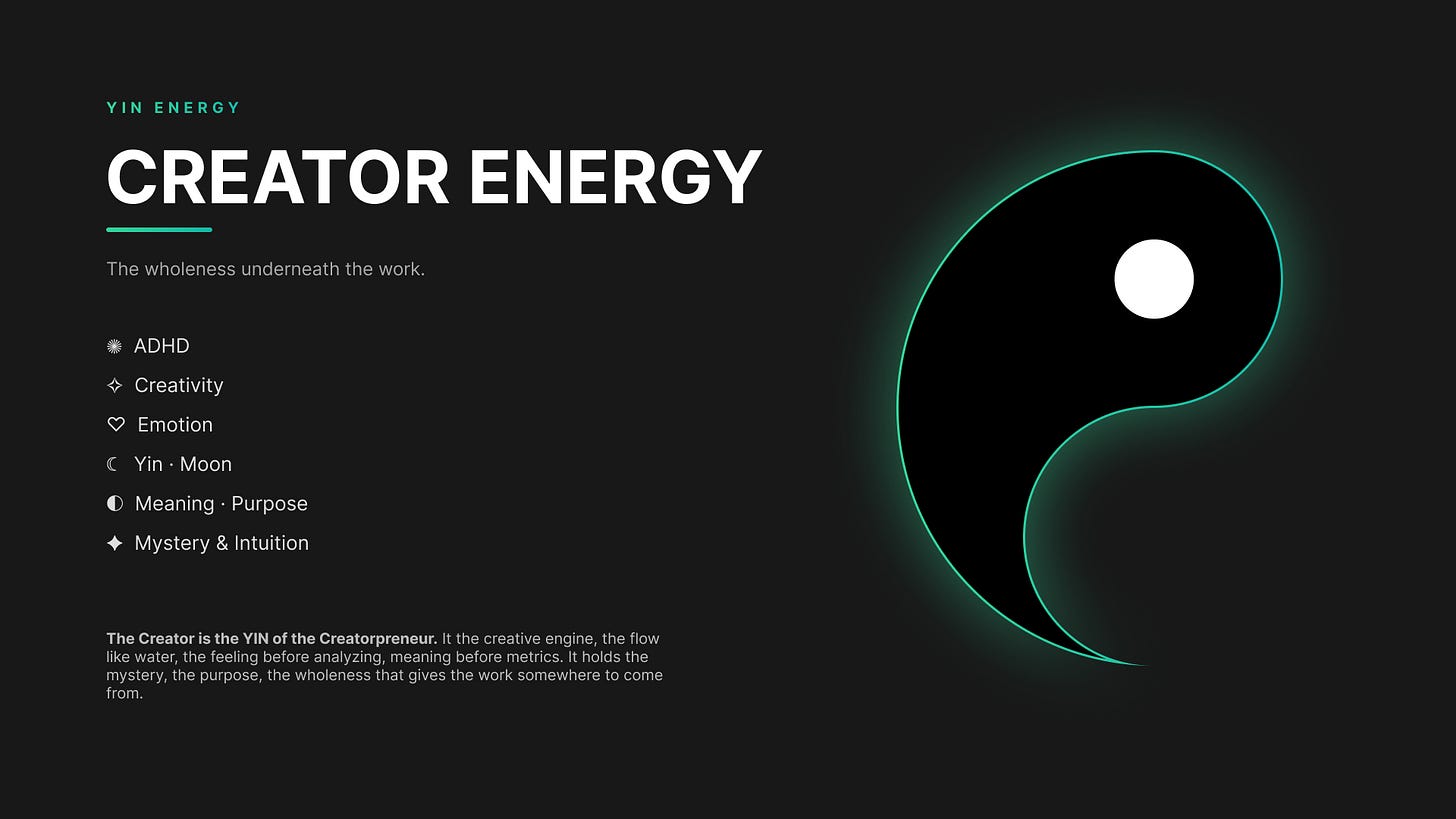
Stage 6: Develop “Creator Energy” and become the author of your life.
Once you can distinguish inherited desires from your own values by detaching from others’ opinions, you deliberately construct your philosophy, relationships, work, and lifestyle around principles you consciously endorse. (It’s what I often explain about building an internal universe inside your mind)
You become a creator, an author, and a designer, and stop following society’s norms and “concepts.” (ADHD is a concept, intelligence is a concept, etc.)
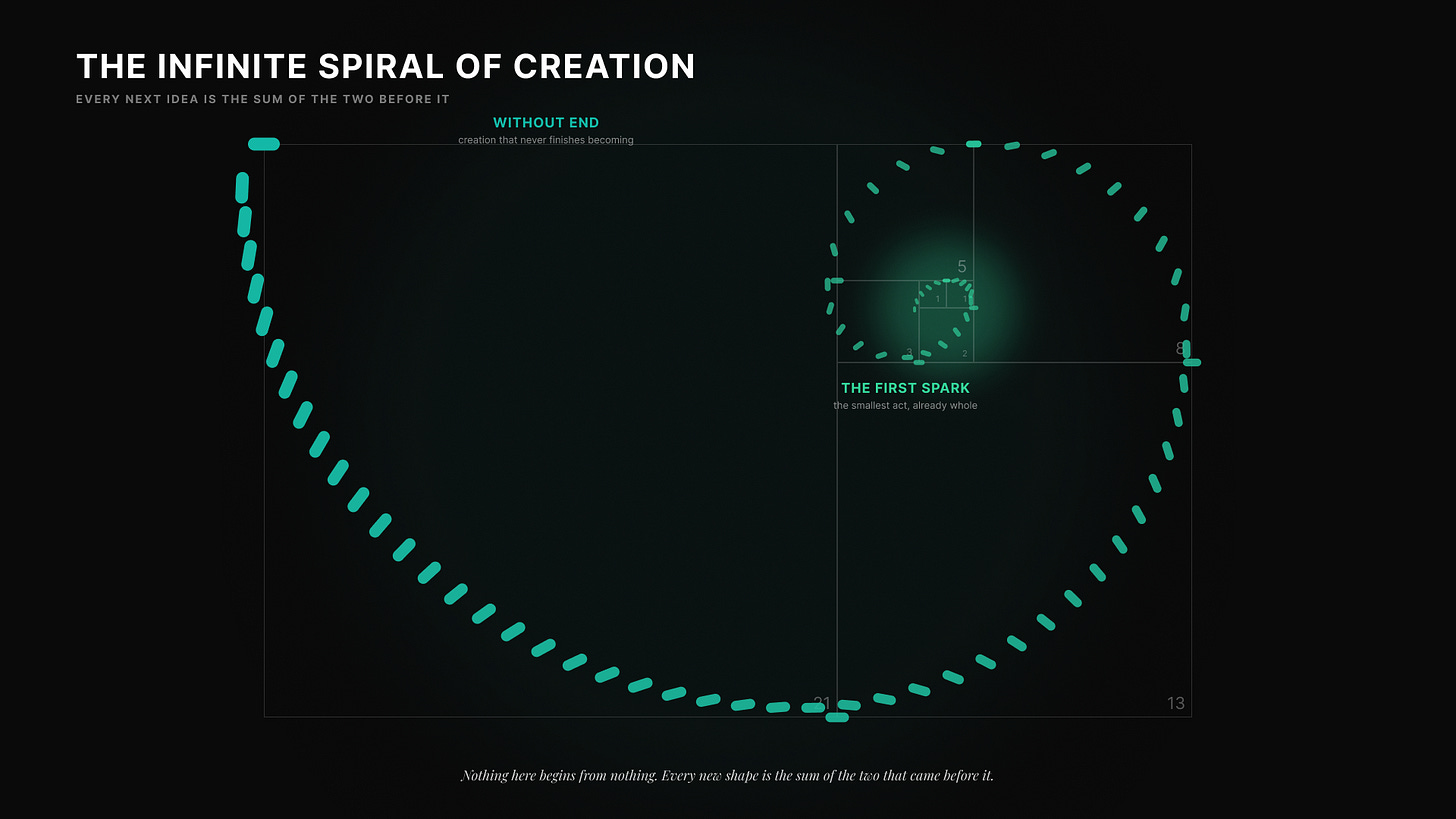
You start focusing on the spiral of creation.
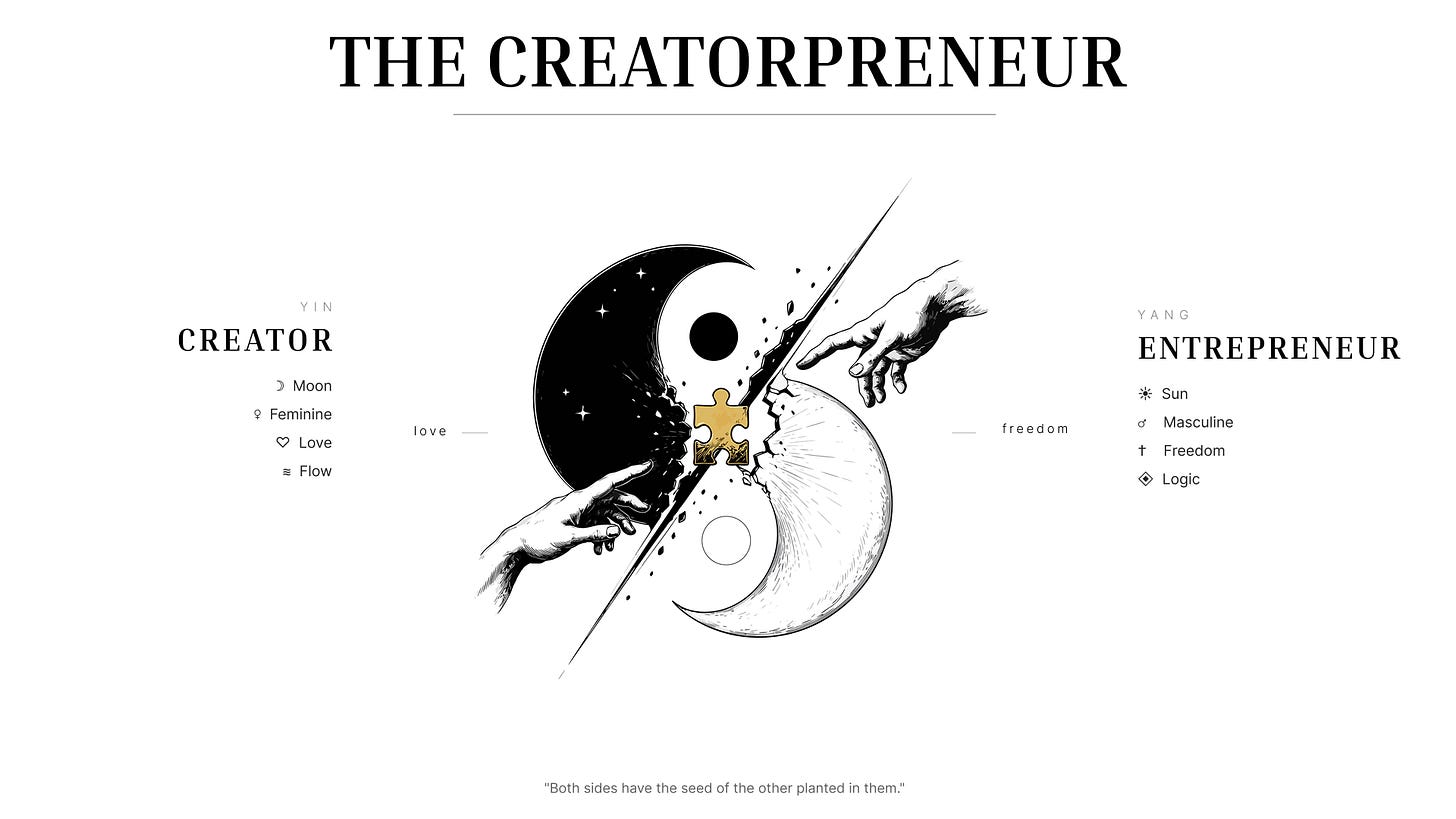
Stage 7: Integrate the Creatorpreneur and maintain inner equilibrium.
Eventually, every identity you adopt is incomplete. Entrepreneur/artist. Masculine/feminine. Rational/intuitive. Ambition/contentment. Individual/community. You realize there is no black-and-white; everything exists on a pendulum. Instead of identifying with one side, you learn to hold apparently contradictory truths simultaneously, which most people can’t, and why there is so much debate about diets, politics, etc.
Stage 8: You Devote Yourself to Others.
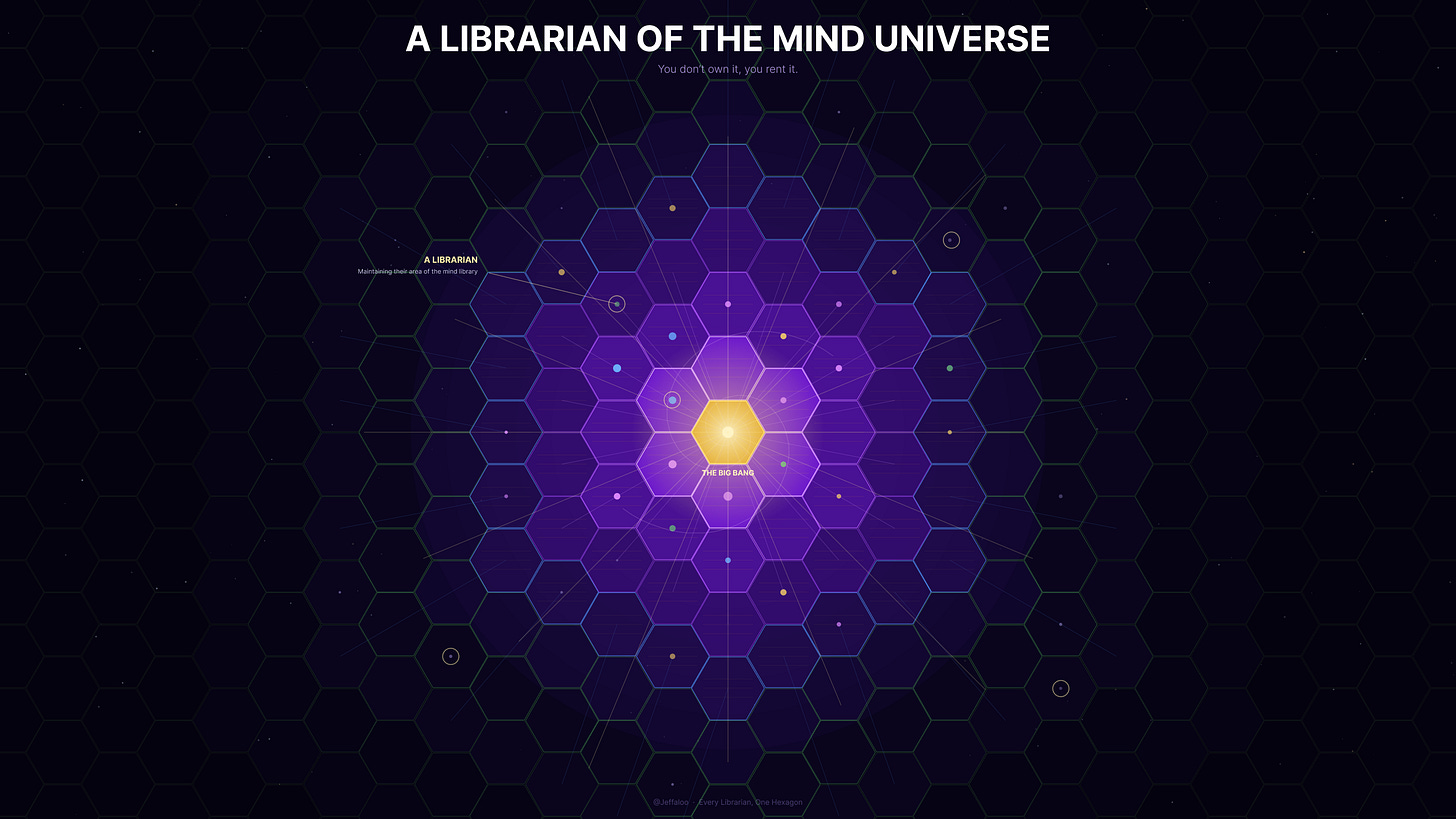
You stop thinking about yourself primarily. You devote yourself to serving others because you have met your needs and self-actualized to the point of your current wisdom. Business, art, wealth, knowledge, and influence become instruments of contribution. You change “What life do I want?” to “What does life require from me?” You accept the role you want to play and devote yourself to it. This can be a father/mother role or a librarian of the universe's infinite knowledge, where you organize a small part of this library. (The Library of Babel)
Inside your area of “expertise”, you adopt the role of a master and teach students to become their own masters. You develop the skills and role of a librarian in organizing and maintaining knowledge to teach and invite new “players” into the “game” of conscious growth.
Stage 9: You Transcend The Game.
Even the identity of being wise, enlightened, successful, or useful becomes something you can release. Achievement, failure, status, and identity lose their absolute grip.
You fully surrender to the reality of service itself.
The Infinite Game.
The goal is not to finish the game; you can’t, and you don’t want to. (What else would you do day-to-day?)
It’s more about discovering the role you want to play.
Successful and happy people have roles. — Andrew Huberman
- Which character do you want to play, and how can you level up on a daily basis?
- What skills do you need to adopt, and how can you curate a routine and environment around those skills?
- Who are the players you want to invite into your tribe who follow the same main “quests” but have complementary skills?
→ Start alone to learn agency and competence, and then find the right tribe members to make the journey more meaningful.
Knowledge is infinite, so you never reach the pinnacle, but you learn to follow a path of endless progression and find joy in the daily pursuit of mastery in serving reality itself.
It is your evolutionary destiny to use what is unused, to learn and keep on learning for as long as you live. To choose this destiny and to walk the path of mastery.
Thanks for reading.
A video version and an audio version of this will come out on my new channel and Spotify “cast” in the next couple of days.
See you soon.
Jeff
P.S. If you want to join the waitlist for “The Weekly Bonfire” comment:
👉 “waitlist”
Whenever you're ready, there are 3 more ways I can help you:
1) Read more on my blog. (Published Content)
2) Discord Channel: The Main purpose is to provide a free ADHD community with weekly Wednesday (8 pm EDT) group live calls to help people make their ADHD life easier.
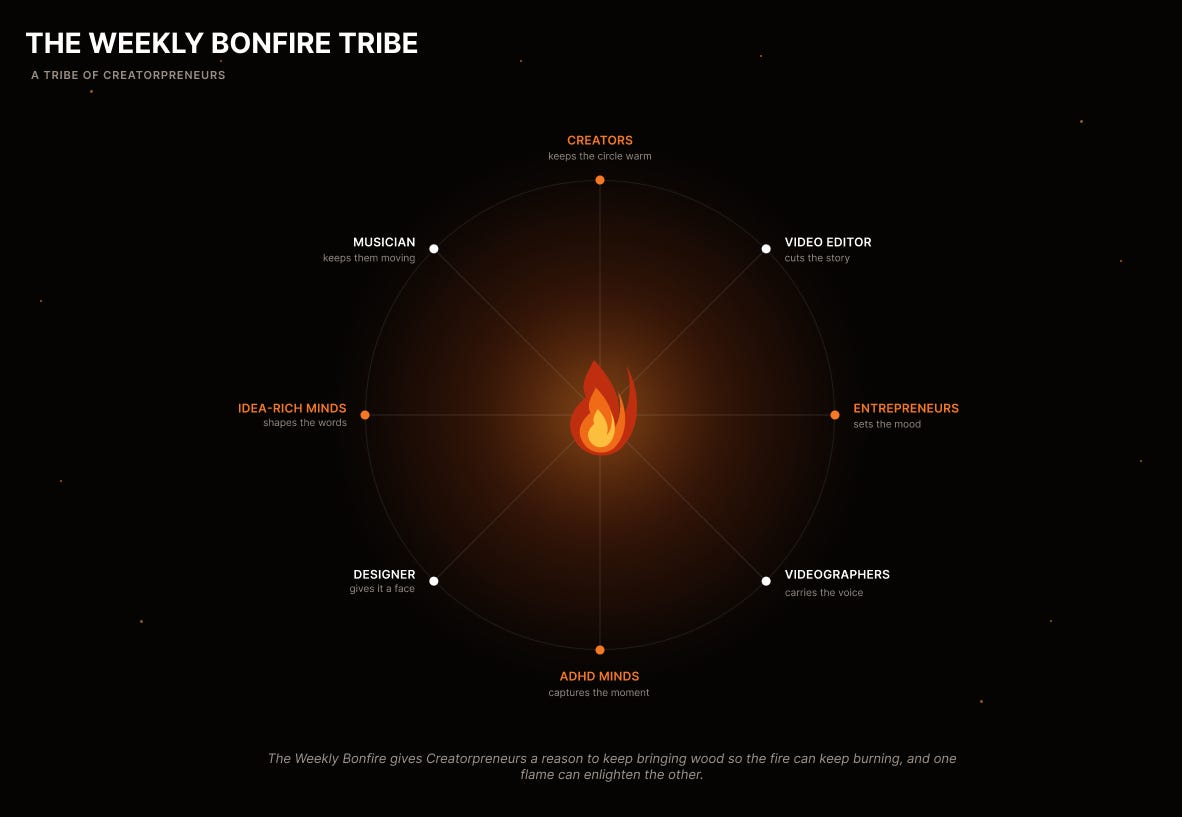
3) Weekly Bonfire: A tribe of creators, entrepreneurs, and ADHD people who meet at weekly bonfires to create, share knowledge, build businesses, collaborate together, do audience share, and keep each other accountable.
|